

Therapy built for your world.
Not therapy imported from somewhere else and expected to fit. Therapy that starts with the life you are actually living, the family you are actually part of, and the language your feelings actually arrive in.
You should not have to translate yourself before the work can begin. That translation, the quiet editing of who you are so someone else can understand you, is exhausting, and for many people it is part of why therapy never quite worked. Here, context is not something you explain around. It is where we start.
Three things shape how we work.
None of them are add-ons or specialisms you have to ask for. They are the ground the work stands on.
Affirming is the floor, not the ceiling.
Being queer, trans, or questioning is not something we are here to treat. You will not have to defend your relationship, explain why your identity matters, or educate your therapist on the basics while you are paying for the hour.
We start from the understanding that your identity is not a symptom, and get on with whatever actually brought you in, which is often the same things that bring anyone to therapy. Affirming care is not a specialism you have to hunt for here. It is part of how we work.


Trauma-informed, which mostly means paced.
Trauma-informed is a phrase that gets used loosely, so here is what we mean by it in practice. We do not push you to relive the worst of it to prove the work is serious. Going too quickly into painful material can leave you overwhelmed, and we treat that as a real risk rather than a sign of resistance.
We build some steadiness first. You have a say in the pace, and we check in rather than assuming. Safety comes before depth, because depth reached without enough safety may not hold.
Context is not a footnote.
Duty to family, the weight of what people will say, an arranged marriage, a joint household, faith, migration, the particular guilt of wanting a life your parents did not get to want. These are not distractions from the real material. Often, they are the real material.
Our practitioners work with these contexts rather than treating them as obstacles to some more universal self underneath. You should not have to flatten your world into something a textbook would recognise before it counts.
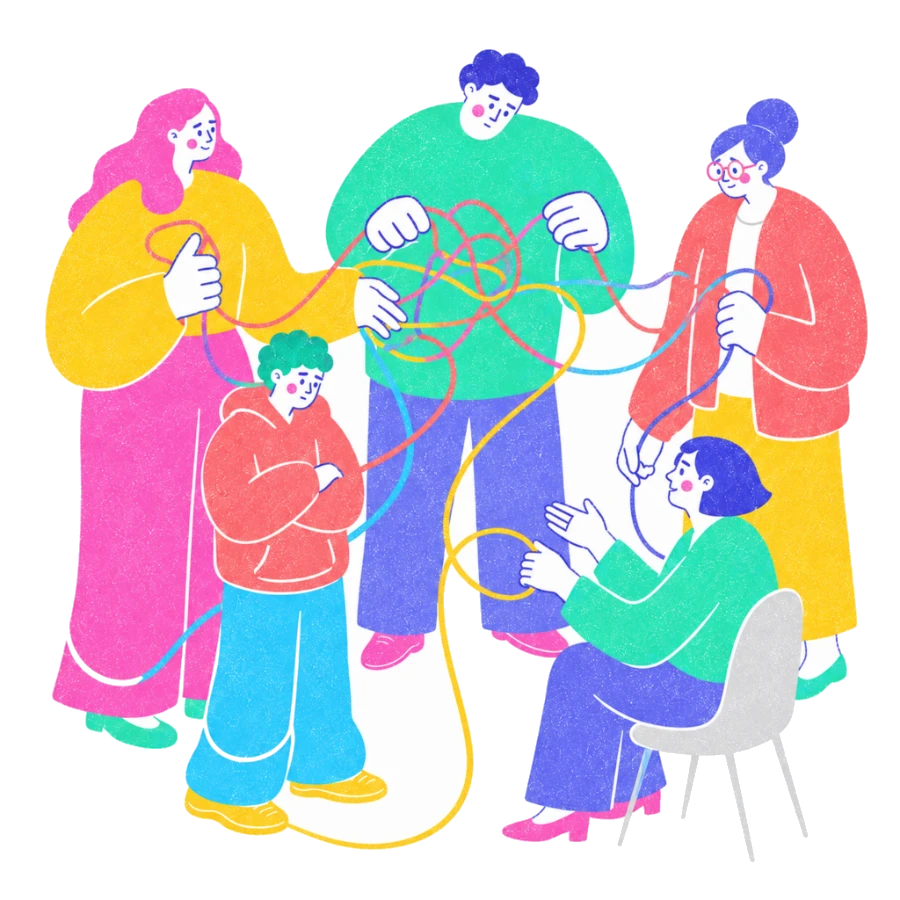
You are not on a timeline set by anyone else.
Some weeks are for hard material and some are for steadying, and both are part of the work. If something feels like too much, that is information we want, not a failure on your part. We would rather slow down and stay useful than push for a breakthrough that leaves you less steady afterwards.
When we would suggest more than we can offer.
Online therapy is right for a great many things and not right for everything. We would rather be honest about that line than keep you somewhere you cannot be helped well. If you are in acute crisis, if weekly sessions are not enough to keep you safe, or if what you are carrying needs medical supervision, intensive support, or in-person care that we cannot provide online, we will say so and help you find the right level of care rather than hold on to you. Recommending someone else is not us giving up on you. It is part of taking your care seriously.
If you are in immediate danger or worried you might act on thoughts of harming yourself, please contact Tele-MANAS (14416 or 1-800-89-14416, available 24×7 across India) or your local emergency services.
How change actually happens.
Change in therapy is less dramatic than films suggest and more durable than a single insight. Often, it involves two things happening slowly and together.
First, we make sense of the pattern.
The thing you came in about is usually not a one-off. It is a pattern, a way of responding that made sense at some point, often made complete sense given where it came from, and has outstayed its usefulness. Together, we trace how it works: what sets it off, what it protects you from, and what it costs you now. Seeing the pattern clearly, without shame, is not the whole work, but very little changes while it stays invisible.
Then, we practise something different.
Understanding a pattern rarely dissolves it on its own. Change comes from doing something other than the old move, first in the room where it is safe to get it wrong, then in the parts of your life where it actually counts. This is the slower, less cinematic part of the work, and it is where understanding becomes something you can use. You will not be handed homework and left to it. You practise, you come back, we look at what happened, and we adjust.
The methods behind the room.
We are integrative rather than loyal to one school. Your therapist chooses the approach that fits the problem in front of you, explains why, and changes it when it stops being useful.

ACT
You do not have to feel ready before you move. We work out what matters to you and build action around it, carrying the weather with you.
How it works →
DBT: riding the wave
Skills for the hour you cannot think straight. Something to hold until the intensity passes, rather than advice for later.
How it works →
DBT: saying the thing
How to ask, refuse and repair without losing the relationship or losing yourself. Practised out loud, in session.
How it works →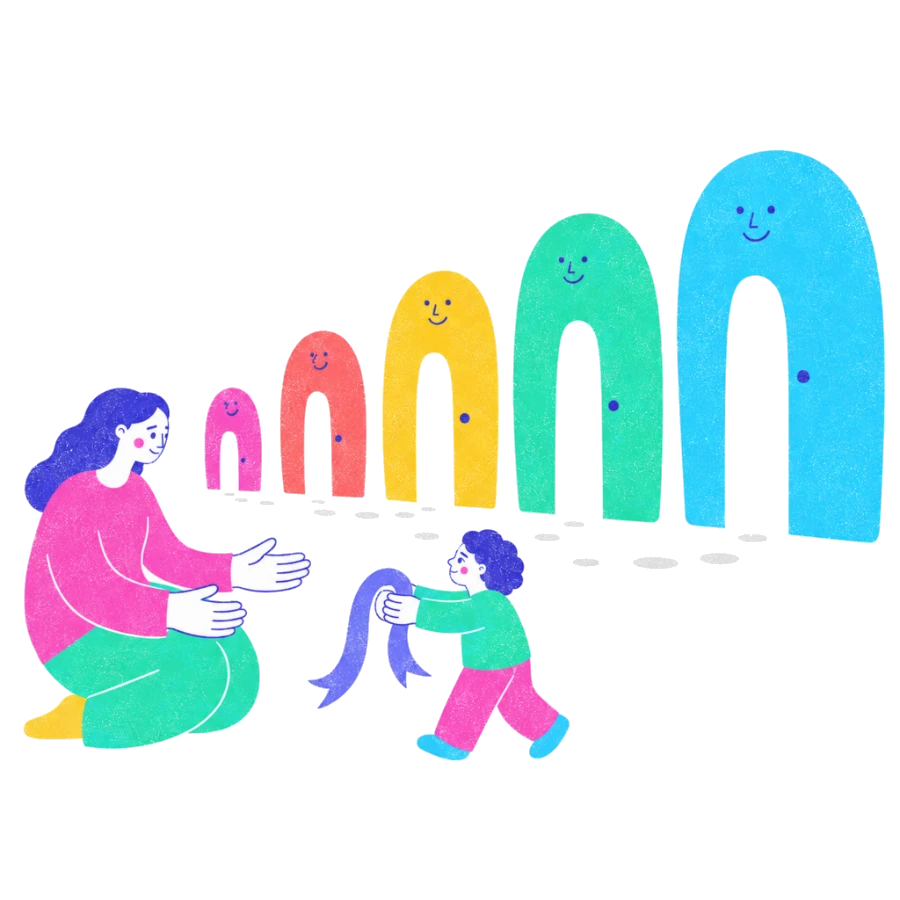
Graded exposure
Fear shrinks in steps, not leaps. We build a ladder you agree to, and you set the pace on every rung.
How it works →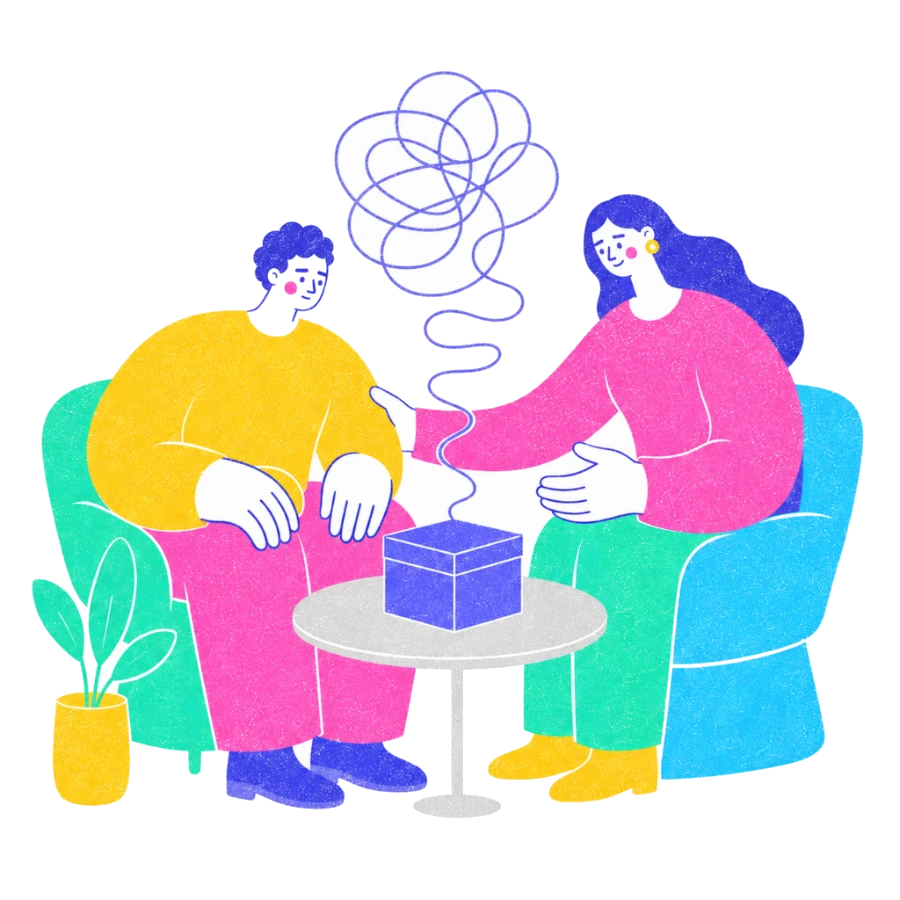
ERP for OCD
Learning to leave the thought unanswered. Uncomfortable at first, freeing after, and never done to you without consent.
How it works →What people want to know about how we work.