
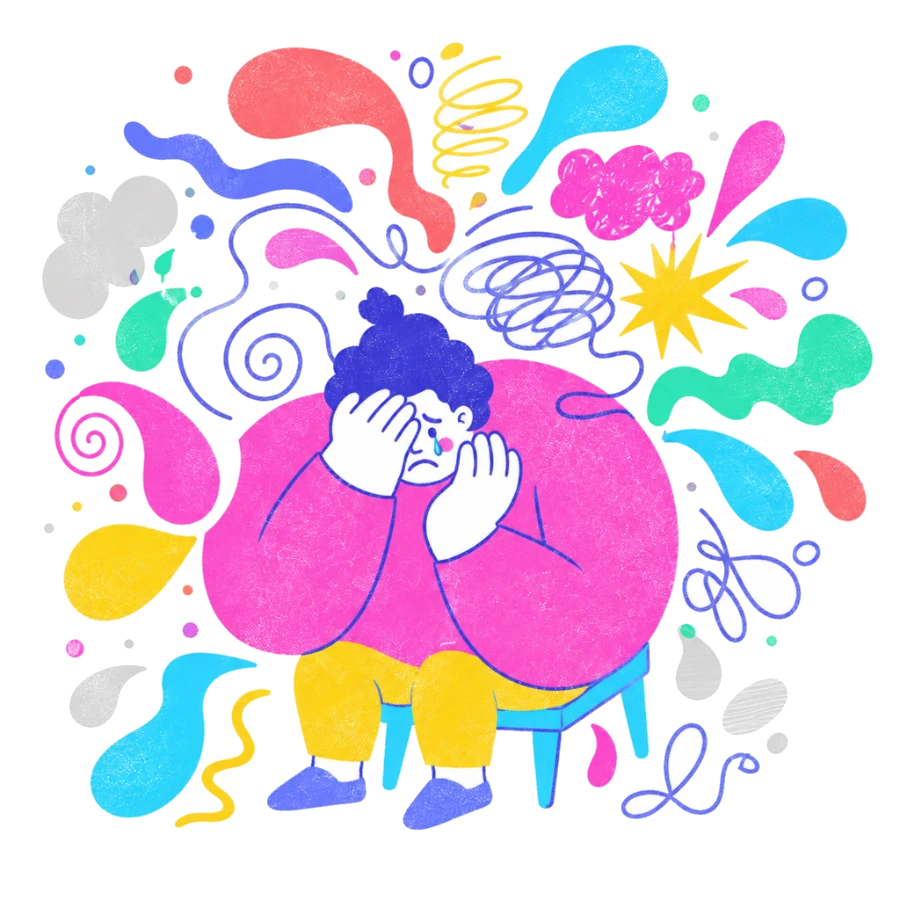
The clinical words, translated back into being human.
Nobody Googles "generalised anxiety disorder" at 2am. They Google "why do I feel on edge for no reason." So we start where you actually start: with the feeling, not the label.
Find the feeling. We will name it together.
Each of these is a door, not a diagnosis. Tap the one that sounds most like your life.
"I can't sleep on Sunday nights."
Often: anticipatory anxiety, the body keeping score before the week even starts.
How we hold this →"I feel nothing, just flat."
Often: depression or emotional numbing, the volume turned down on everything.
How we hold this →"The intrusive thoughts will not stop."
Often: OCD, which is treatable, and far more common and less shameful than it feels.
How we hold this →"I am smart, but I cannot start anything."
Often: adult ADHD, still badly under-recognised in India, especially in women.
How we hold this →"Nothing bad happened, but I am not okay."
Often: trauma that lived quietly, in neglect, pressure, or conditional love.
How we hold this →"I am tired, and rest feels like guilt."
Often: burnout and the worth wound, not laziness.
How we hold this →"I keep picking the same person."
Often: attachment patterns, the familiar mistaken for safe.
How we hold this →"I got married and I am somehow lonelier."
Often: the loneliness inside relationships that nobody warns you about.
How we hold this →"Why do I cry at random things?"
Often: backlogged grief, a nervous system finally exhaling.
How we hold this →How we approach conditions
A diagnosis can be useful. It can also become a cage, or a word that makes you feel more broken than you are. So we hold clinical language lightly and late: we lead with your lived experience, translate to the clinical only when it helps, and always in plain Indian-English with examples from a life that looks like yours.
You do not need to arrive with the right word. That is our job, and yours is simply to tell the truth about how it feels.
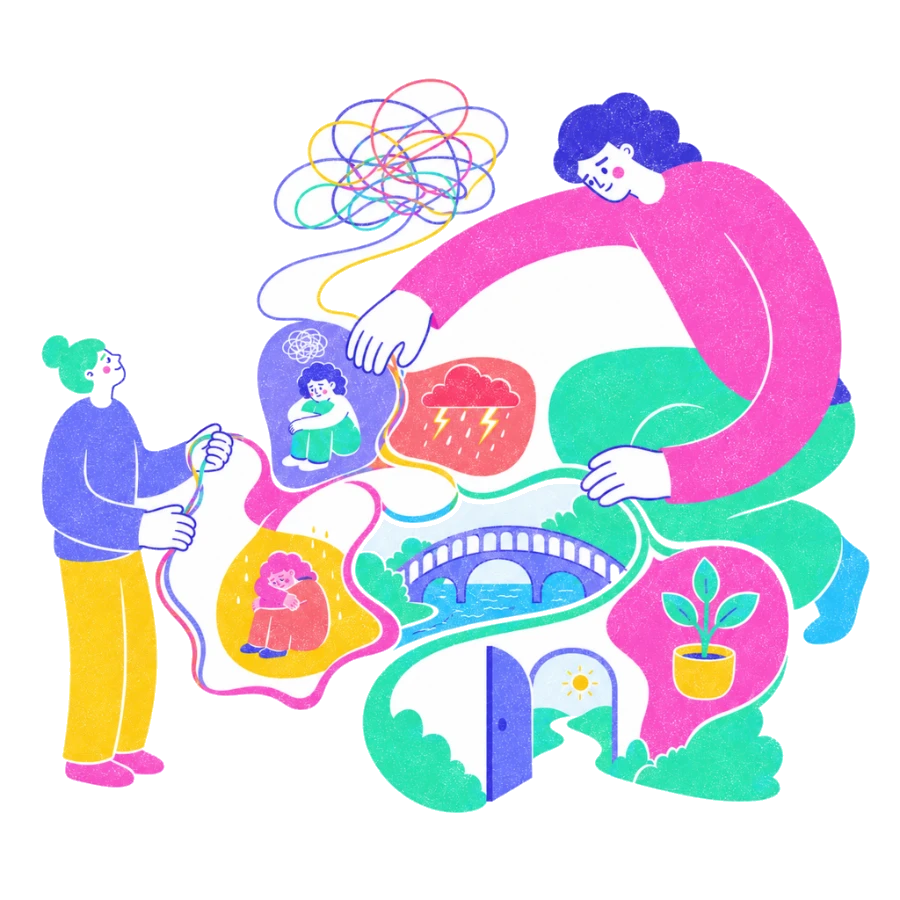
The label is a shortcut for clinicians, not a description of your life.
Diagnostic language exists so professionals can agree on what they are looking at. It was never meant to be the sentence you use to explain yourself to yourself.
Getting the right help faster, and knowing you are not the first person here.
What it is not good for
Explaining who you are, predicting what you can do, or replacing the specific account of your own days. A diagnosis is a starting point for a conversation, not the end of one.
Same feeling, different rooms.
In the body first
A tight chest before a family call. A stomach that turns at the sound of a raised voice. For many people distress is physical long before it is nameable.
In the way you work
Overpreparing. Not being able to stop. Reading a neutral message four times looking for the disappointment in it.
In how you are with people
Managing the room. Apologising pre-emptively. Being the one who is fine, because someone has to be.
Labels, and what to do with them.
The rest of the list, in plain words.
These are the ones people most often arrive with and least often say out loud. Every one of them is workable, and none of them makes you difficult.

Depression
Not sadness. The flatness where things you used to want stop registering, and getting up costs more than it should.
Read this →
Panic
The body sounding an alarm with no fire. We work on what to do in the ninety seconds, and on why the alarm is so sensitive.
Read this →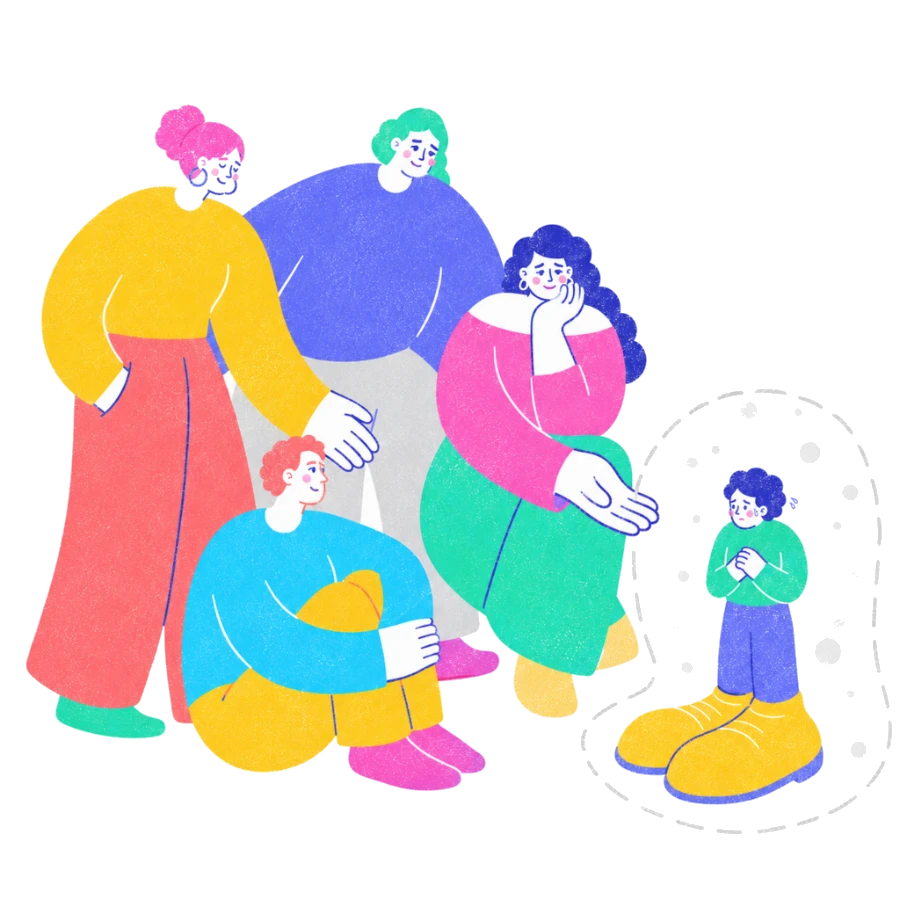
Social anxiety
The rehearsal before, the replay after. Rejoining rooms at a pace you choose rather than one you endure.
Read this →
ADHD & attention
Not a discipline problem. Building systems around how your attention actually behaves instead of how it is supposed to.
Read this →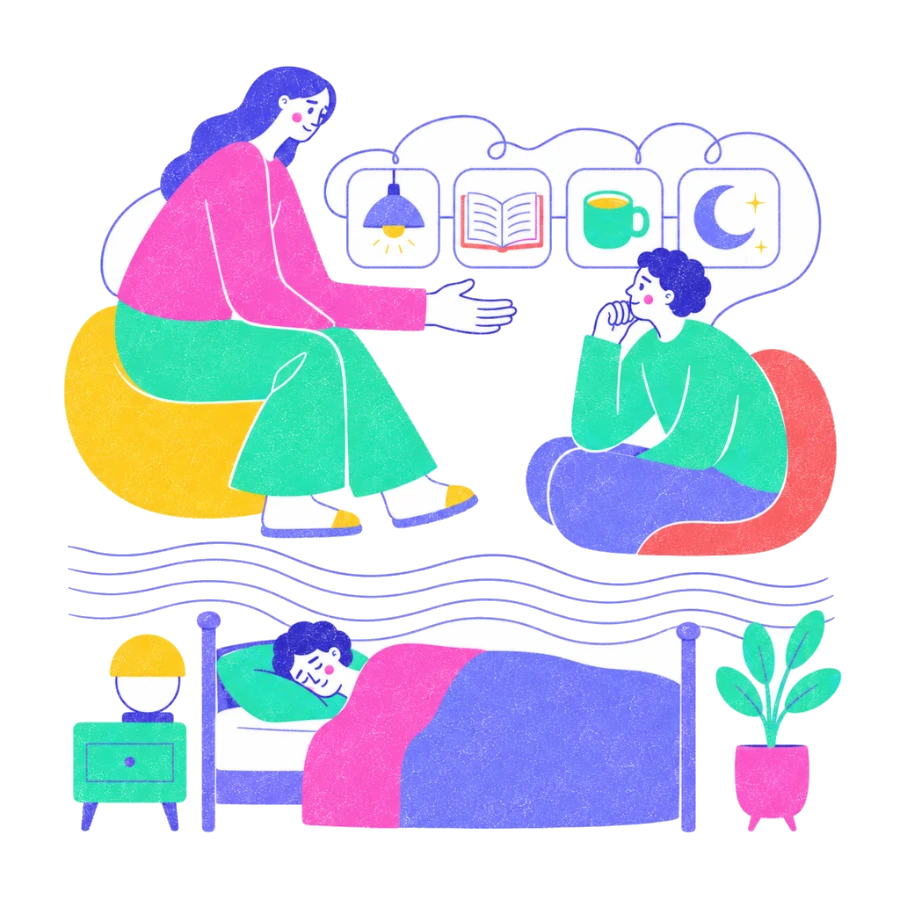
Sleep
The 2am scroll, the dread of the alarm. Treated as its own problem, not a symptom to fix last.
Read this →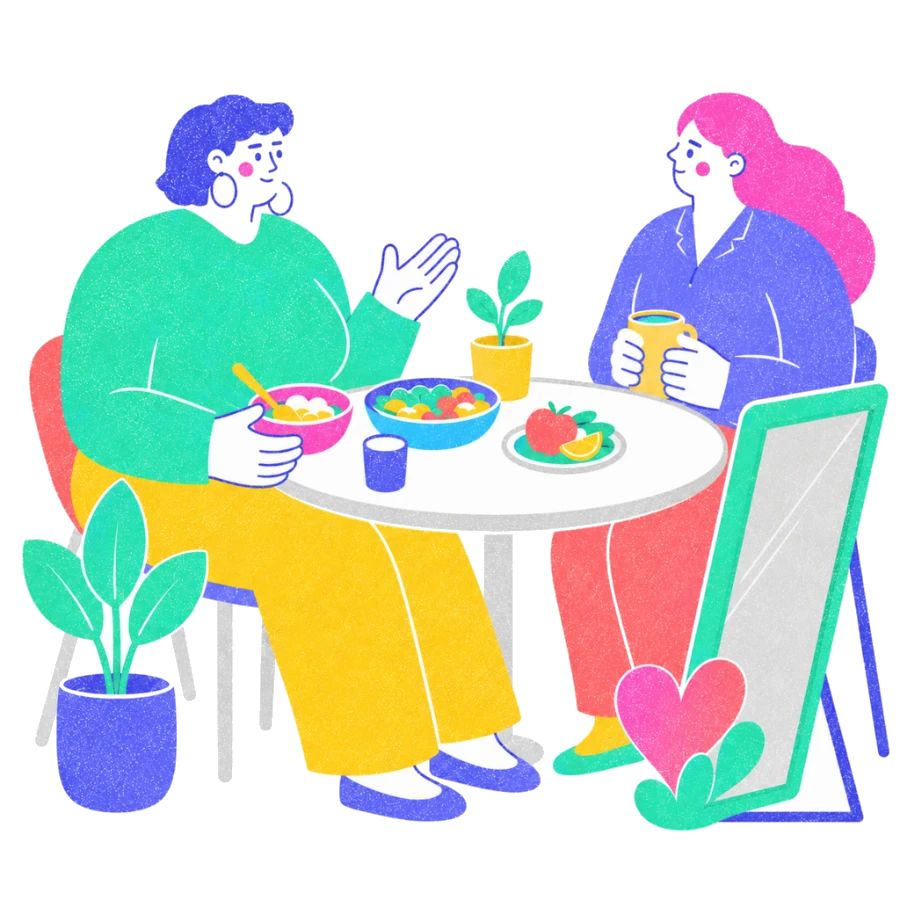
Food & body
Working towards neutrality rather than love. Eating without negotiation, and a body you can simply live in.
Read this →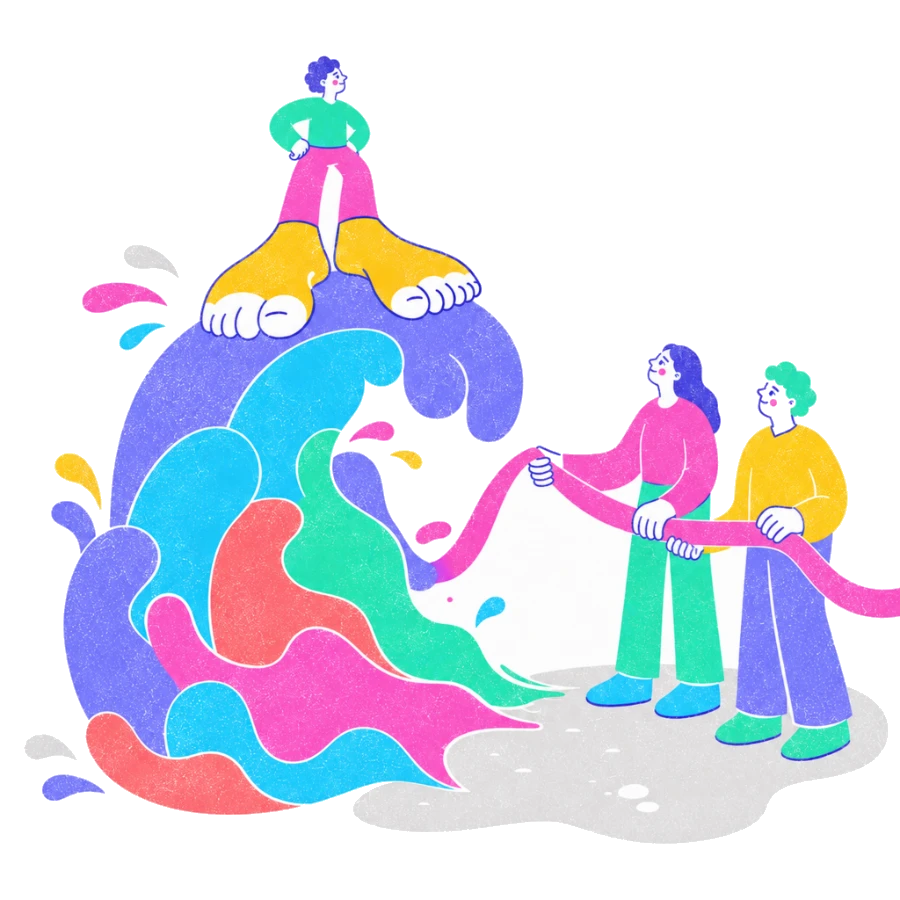
Substance use & habits
A craving is a wave, not a verdict. We build the skill of staying upright and the support that makes it possible.
Read this →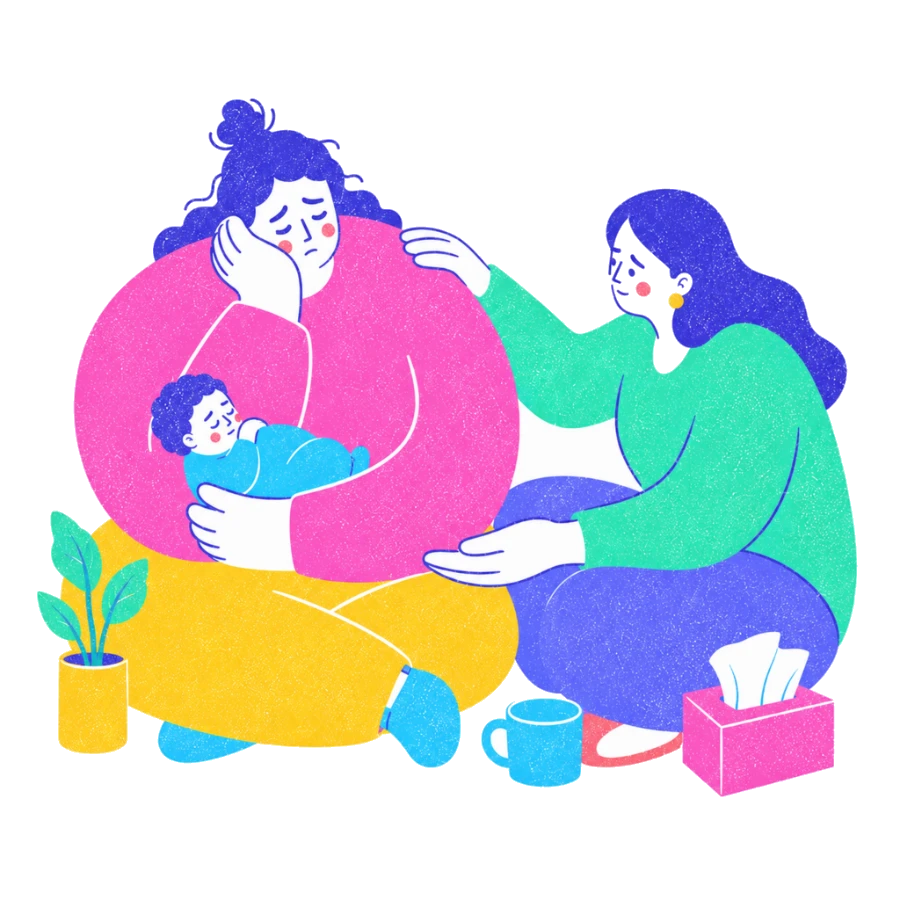
Pregnancy & new parenthood
Nobody prepared you for this part. Space for the fear, the grief and the ambivalence, alongside the love.
Read this →