
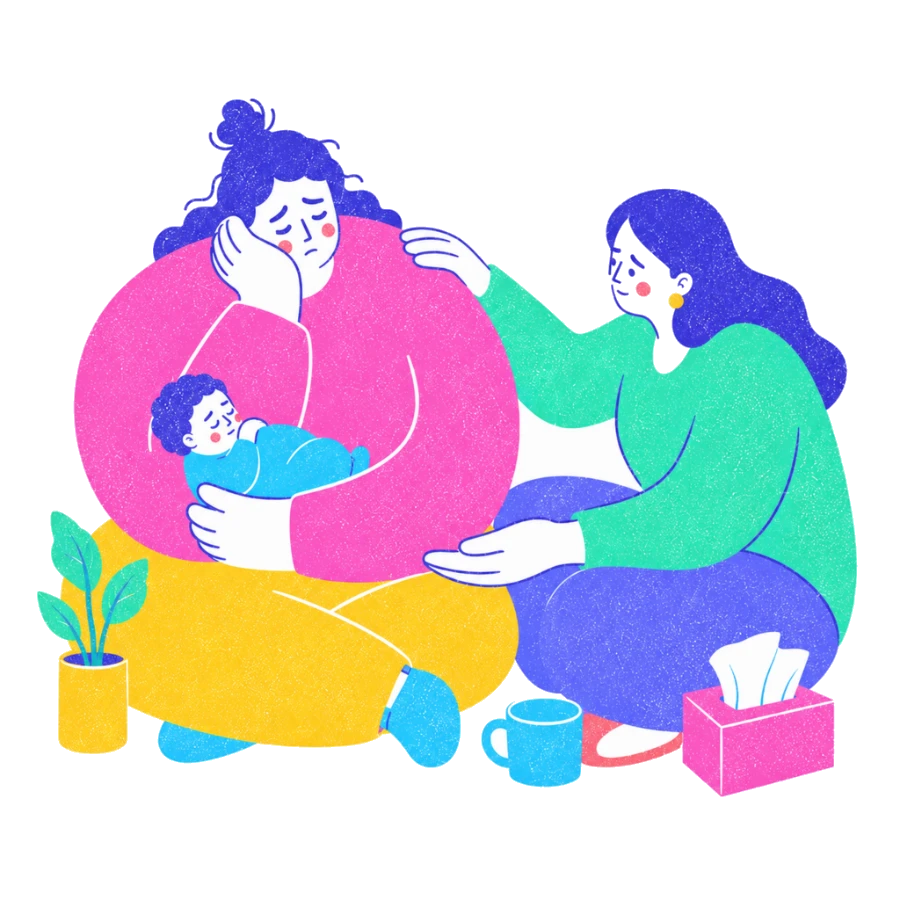
Everyone is asking about the baby. Somebody should be asking about you.
The house is full of people helping. You are holding a child you would do anything for, and feeling something nobody prepared you to admit.
Perinatal mental health covers pregnancy through the first year after birth. Depression and anxiety in this window are common, treatable, and heavily under-reported in India because the entire conversation shifts to the baby and because admitting difficulty feels like admitting ingratitude. Frightening intrusive thoughts about harm are common, are not intent, and are one of the most misunderstood symptoms there is.
The house is full and you are alone
In many Indian families the arrival of a baby brings people: parents, in-laws, aunts, a steady flow of visitors. There is help with the cooking and advice about everything. What there frequently is not is a single person asking how you are, separately from how feeding is going.
Being surrounded and unasked is a specific kind of loneliness, and it is harder to name than being alone, because from outside it looks like abundant support.
The thoughts that frighten people most
A large proportion of new parents get sudden, vivid, unwanted thoughts about harm coming to the baby. Dropping them. Something happening on the stairs. These arrive with real horror attached, and almost nobody says them out loud because saying them feels like a confession.
They are intrusive thoughts. Their presence reflects how much you care and how alert your threat system has become, not what you want. Distress about a thought is the clearest indicator that it is not intent. This is treatable, and it improves quickly once it is named correctly.
Sentences people say in a first session.
"I should be happy and I am not."
The gap between the expected feeling and the actual one, plus guilt for the gap. This is the most common opening sentence.
"I cannot say this to anyone."
Especially where a difficult pregnancy took years or treatment. Difficulty feels like ingratitude.
"I get thoughts that terrify me."
Intrusive thoughts about harm. Common, not intent, and rarely spoken about.
"Everyone asks about the baby."
Appointments, visitors, calls. The mother becomes infrastructure rather than a person.
What we actually do.
For pregnancy, for after, and for the version of you that got misplaced.
The first year
Mood, sleep, feeding pressure and the identity shift, addressed as one thing rather than separate complaints.
Read this →
The frightening thoughts
Naming them accurately, understanding why they arrive, and taking the horror out of having them.
Read this →
A full house
Help that is genuinely help, and advice that is not. Boundaries with family without a rupture.
Read this →| Baby blues | Postpartum depression | |
|---|---|---|
| Starts | Two to three days after birth | Any time in the first year |
| Duration | Up to two weeks | Persists beyond two weeks |
| Mood | Tearful, up and down | Flat, or persistently low |
| Function | Largely intact | Daily tasks become difficult |
| Treatment | Rest and support | Responds well to therapy, sometimes medication |
How therapy helps
- Ask about you first. Before feeding, weight or milestones. The whole session is yours.
- Correct the record on intrusive thoughts. This single piece of information relieves an enormous amount of secret terror.
- Redistribute the load honestly. Including with partners and with family who believe they are already doing a great deal.
- Hold both truths. You can love your child completely and find this period genuinely hard. Those are not in tension.
The perinatal year, answered plainly.

Someone should be asking how you are.
Tell us where you are in this, pregnant or six months in. We will match you with a therapist who works in the perinatal year.