
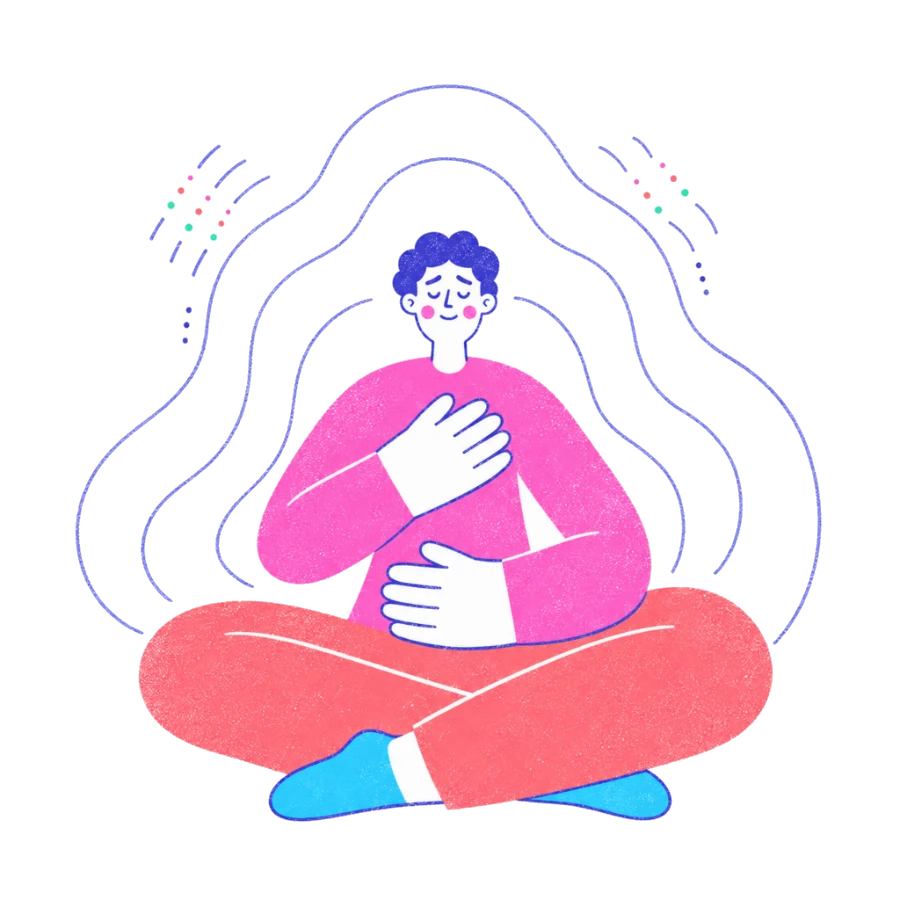
A panic attack is not you losing control. It is your body protecting you too well.
The heart goes first, then the breath, then the certainty that something is seriously wrong. Twenty minutes later you are fine, exhausted, and afraid of the next one.
A panic attack is a full alarm response firing when there is no danger. Nothing is physically wrong, which is why every test comes back clear, and the sensations are still real. What keeps panic going is not the attack itself but the fear of the next one, and the shrinking life that fear produces. That cycle is one of the most treatable things in mental health.
Why it feels like something medical
Your body has one alarm and it is not subtle. Adrenaline lifts your heart rate, pulls blood towards large muscles, speeds your breathing and sharpens your senses. That package is superb if there is a threat in front of you. Sitting in traffic or in a meeting, the same package reads as a cardiac event.
This is why so many people meet panic first in a hospital rather than a therapy room. Emergency visits, an ECG, blood work, all clear. Being told nothing is wrong is meant to be reassuring and often lands as being disbelieved.
The fear of the fear is the actual problem
A single attack peaks in about ten minutes and passes. What lasts is the surveillance afterwards. You begin monitoring your chest. You avoid the metro, the lift, the long drive, the wedding hall. Every avoidance brings short relief and teaches your body that the danger was real.
Over months the map of places you can comfortably go gets smaller, and it happens gradually enough that you can always explain each individual no.
What Indian families usually say
Gas. Weakness. Too much thinking. Not enough sleep. Sometimes the advice is to eat something, sometimes to pray, occasionally to stop reading about symptoms online. None of it is malicious, and none of it addresses a nervous system that has learned to sound an alarm at the wrong moment.
Sentences people say in a first session.
"I thought I was having a heart attack."
Most people do, the first time. The sensations are genuine even though the danger is not.
"Every test came back normal."
Which is accurate and unhelpful. A clear report tells you what it is not, and leaves you without a name for what it is.
"I have started avoiding places."
Lifts, metros, highways, crowded functions. Each individual no is easy to justify. The pattern is the problem.
"I am scared of being scared."
This is the sentence that identifies panic disorder rather than a one-off attack, and it is the part therapy works on directly.
What we actually do.
Not breathing exercises alone. Retraining what your body treats as dangerous.
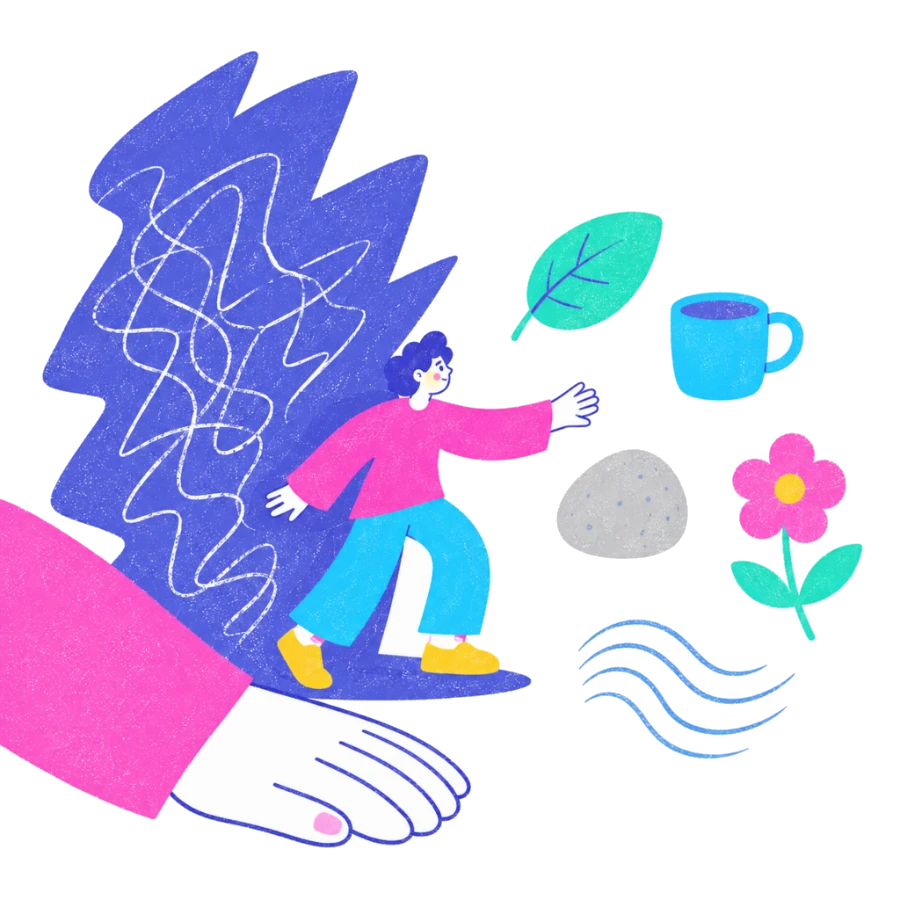
Getting back to now
Concrete skills for the moment itself, practised while calm so they are available when you are not.
Read this →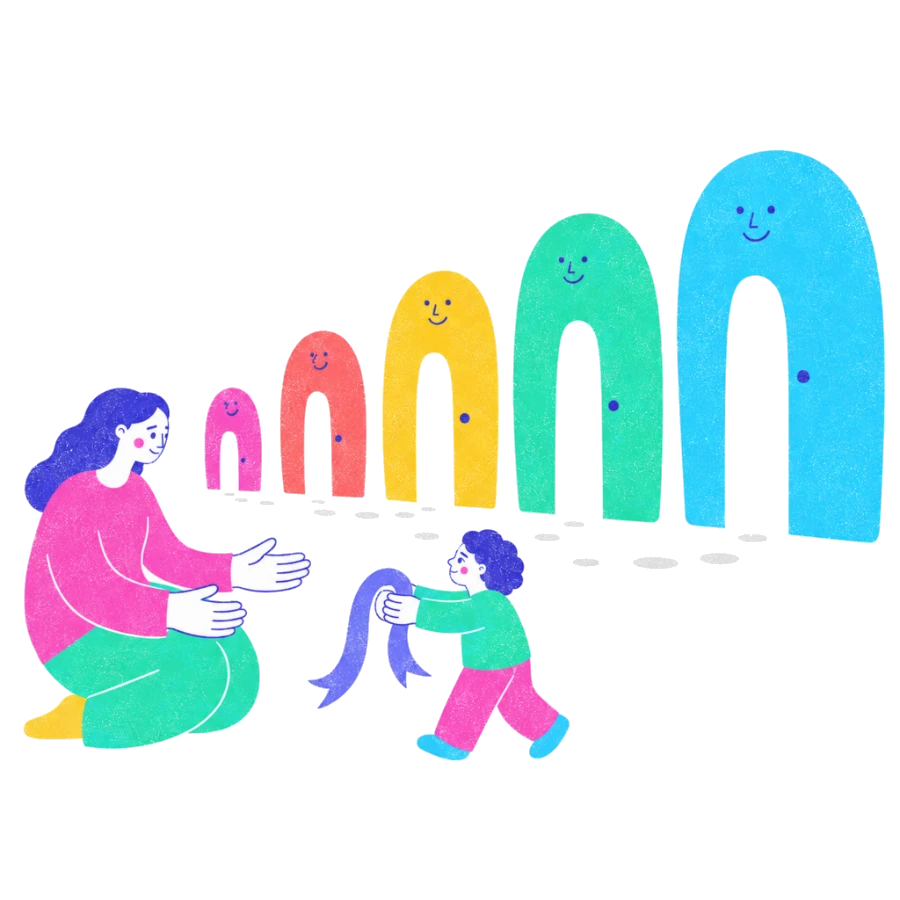
Taking the map back
Returning to what you have been avoiding in an order you choose, slowly enough that your body learns rather than floods.
Read this →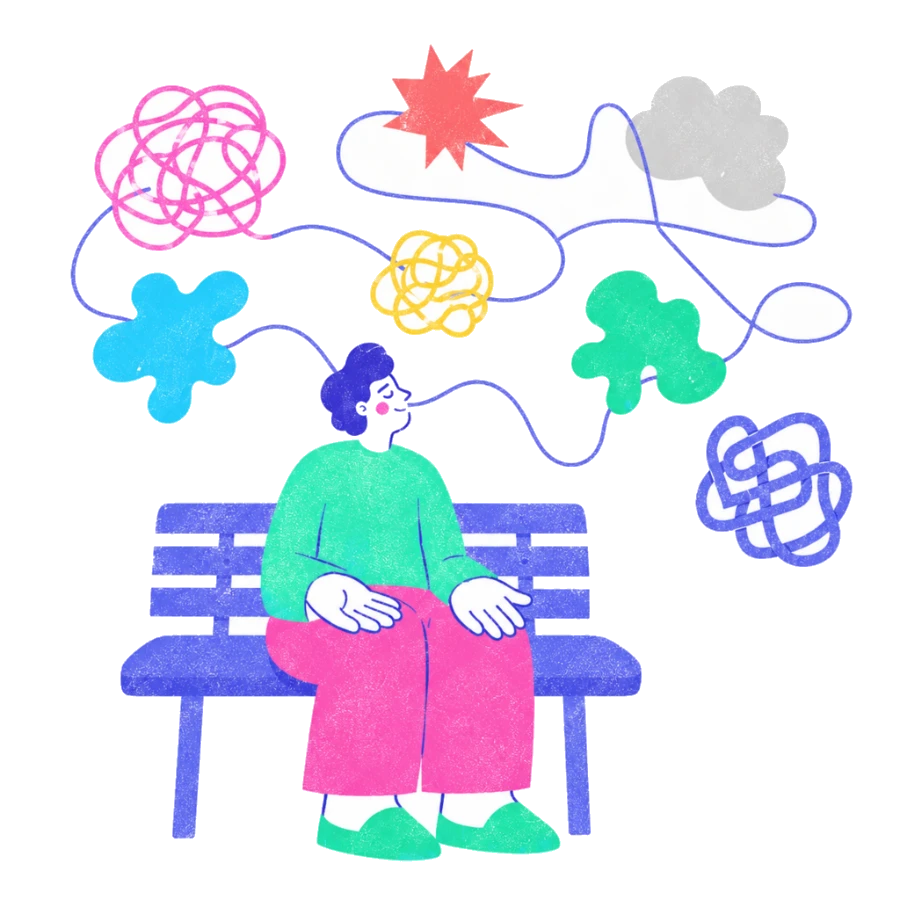
The catastrophic thought
Panic runs on a prediction. We test it, repeatedly, until it stops carrying the weight of a fact.
Read this →| Panic attack | Cardiac event | |
|---|---|---|
| Onset | Sudden, often at rest | Frequently on exertion |
| Peak | Around ten minutes, then eases | Builds or persists |
| Sensation | Sharp, shifting, all over | Pressure, often steady |
| Afterwards | Exhausted but functional | Continued symptoms |
| Fear present | Intense fear of dying or losing control | Fear may be absent |
How therapy helps
- Explain the machinery. Understanding what adrenaline does removes a surprising amount of the terror on its own.
- Stop the safety behaviours. Water bottles, doorway seats, someone on call. Each one quietly maintains the belief that you barely escaped.
- Reintroduce the sensations deliberately. On purpose, in session, in small doses, so a racing heart stops meaning catastrophe.
- Go back to the places. In your order, at your pace, until the map of your life is yours again.
Panic, answered plainly.
The next one does not have to be a surprise.
Tell us what has been happening in your body. We will match you with a therapist who treats panic and will not tell you it is only gas.