
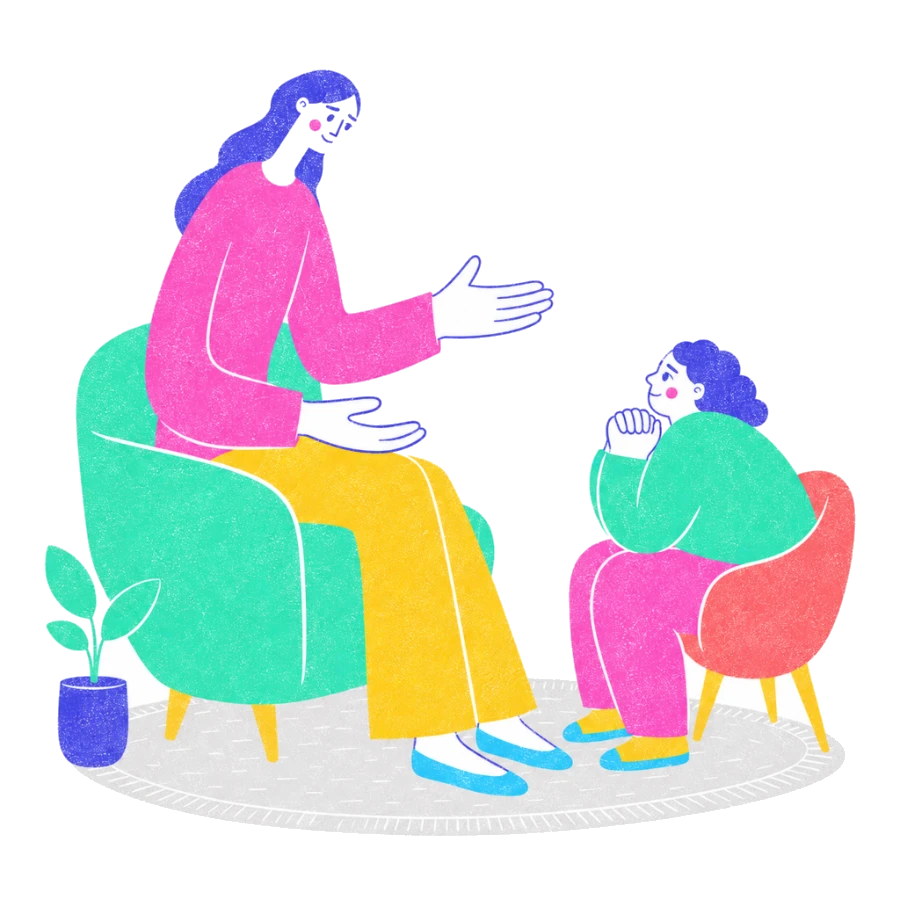
One hour that is entirely yours.
Most people arrive having spent years being useful to everyone else. Individual therapy is the one room where nobody needs anything from you, and where you do not have to translate your own life before you can describe it.
Individual therapy at Fenweh is one-to-one, online, and paced by you. Sessions run fifty minutes. Your therapist is Indian or diaspora-raised, queer-affirmative and trauma-informed, so you can say "my mother would never" or "I am not out at home" and be understood the first time. There is no minimum commitment and no fixed number of sessions.

Not a crisis service, and not a luxury either.
People come to individual therapy at every point on the scale.
"Nothing is wrong, exactly. I just do not feel like myself and I cannot explain why."
And sometimes it does not
Grief that will not move. A relationship ending. A diagnosis you are still absorbing. Panic that arrives without warning. All of it belongs here, and none of it needs to be at breaking point first.
Fifty minutes, and no performance required.
There is no correct way to use the hour. Some people arrive with a list. Some arrive with nothing and find the words in the room.
You talk, at your pace
Your therapist will not rush you toward a conclusion or hand you a technique in the first ten minutes.
They ask, carefully
Questions that open something rather than test you. You can decline any of them.
Something gets named
Often the relief is simply that the thing you have been carrying now has language around it.
You decide what is next
Weekly, fortnightly, or a pause. The frequency is a conversation, not a policy.
Questions people ask first.
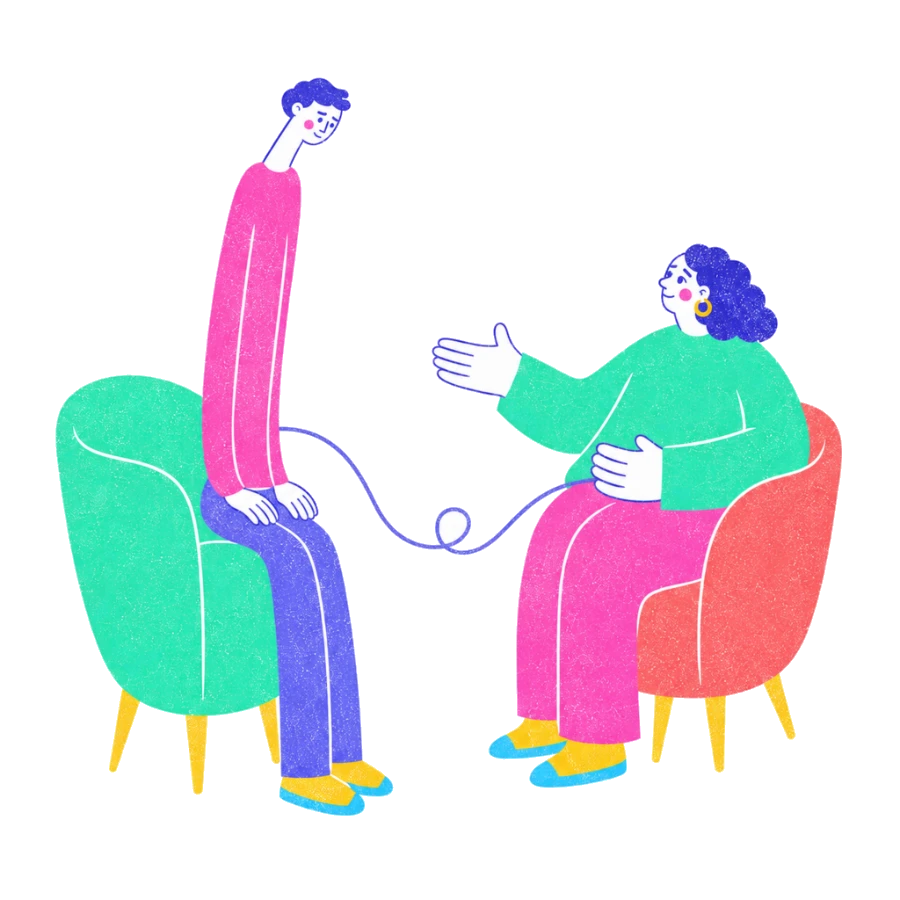
You do not need a reason good enough to deserve the hour.
Some people arrive in crisis. Most arrive tired of managing alone. Both are enough.