
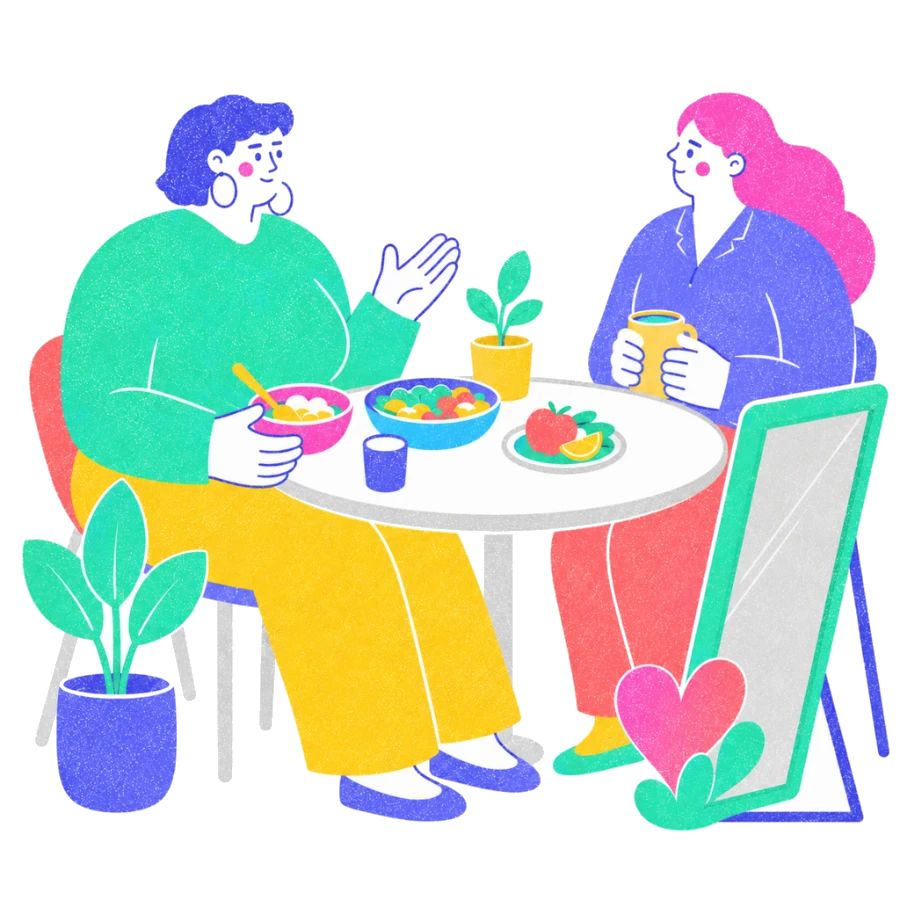
It was never really about the food. It was about having one thing you could control.
Rules that started as discipline. Guilt attached to a meal. A body that has been publicly discussed by relatives since you were twelve.
Disordered eating in India is frequently invisible because so much of it is praised. Restriction reads as discipline, over-exercise reads as dedication, and losing weight attracts congratulation regardless of how it happened. Bodies are also openly commented on within families from childhood. Therapy works on the function the behaviour serves, usually control or safety, rather than on the food rules themselves.
It gets applauded on the way in
Nobody worries about someone who has started eating clean, going to the gym daily and skipping dessert. Those things get admired. That is precisely what makes early disordered eating so hard to catch, because the behaviour arrives dressed as self-improvement and receives a steady supply of encouragement.
The tell is not what you eat. It is how much of your attention the eating takes, and what happens emotionally when the rules break.
A body that was always public
In many Indian families, weight is a normal subject of conversation. Comments at weddings, at family lunches, from relatives you see twice a year. Advice offered as affection. For a lot of people, the earliest sense that their body was a problem to be managed came from people who loved them.
You do not need a diagnosis for that to have done damage. It shapes how you eat in front of others, whether you can be photographed, and what you believe you are allowed to want.
Sentences people say in a first session.
"I have rules, not a problem."
Rules that cannot be broken without distress are worth looking at, whatever they are called.
"Everyone congratulated me."
Which made it much harder to notice, and much harder to stop.
"I cannot eat in front of people."
Skipping meals out, eating later alone. The social cost usually arrives before anyone notices the eating.
"My family still comments."
Weight as ordinary conversation, delivered with genuine affection, landing as something else entirely.
What we actually do.
The function the behaviour serves, and the comment it grew up inside.
Loosening the rules
Slowly, and in an order you agree to. Not a meal plan handed to you on day one.
Read this →
What it is holding
Restriction and bingeing usually do a job. Until something else does that job, letting go is unrealistic.
Read this →
The family table
Scripts for comment about your body, at the wedding and at the weekly lunch.
Read this →| Discipline | Disordered | |
|---|---|---|
| Flexibility | Bends for occasions | Rules cannot be broken |
| Attention it takes | Some | Most of the day |
| If broken | Mild annoyance | Guilt, shame, compensation |
| Social life | Unaffected | Meals out get avoided |
| Purpose | Health | Control, or safety |
How therapy helps
- Start with function, not food. What the behaviour is protecting you from matters more than the specific rules.
- Work at a pace you set. Nothing is removed before something else is in place. Sudden change tends to rebound.
- Separate your body from your worth. Two decades of comment installed a link. It can be uninstalled.
- Involve medical care when it is needed. Where weight, cardiac risk or nutrition are a concern we will say so and coordinate rather than work around it.
Food and body, answered plainly.
You do not have to call it a disorder to get help.
Tell us what your relationship with food actually looks like. We will match you with a therapist who works in this area, without a meal plan on day one.